The Estate of my Dreams
Some people save inspiration photos. I built an entire estate.
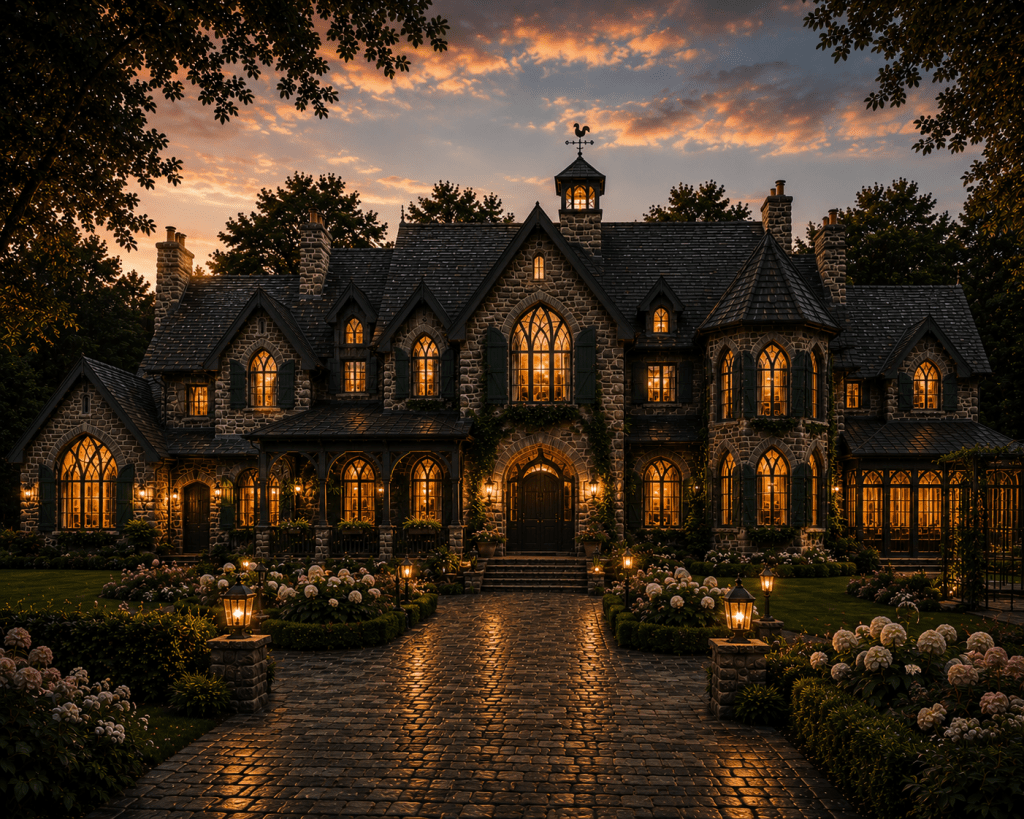
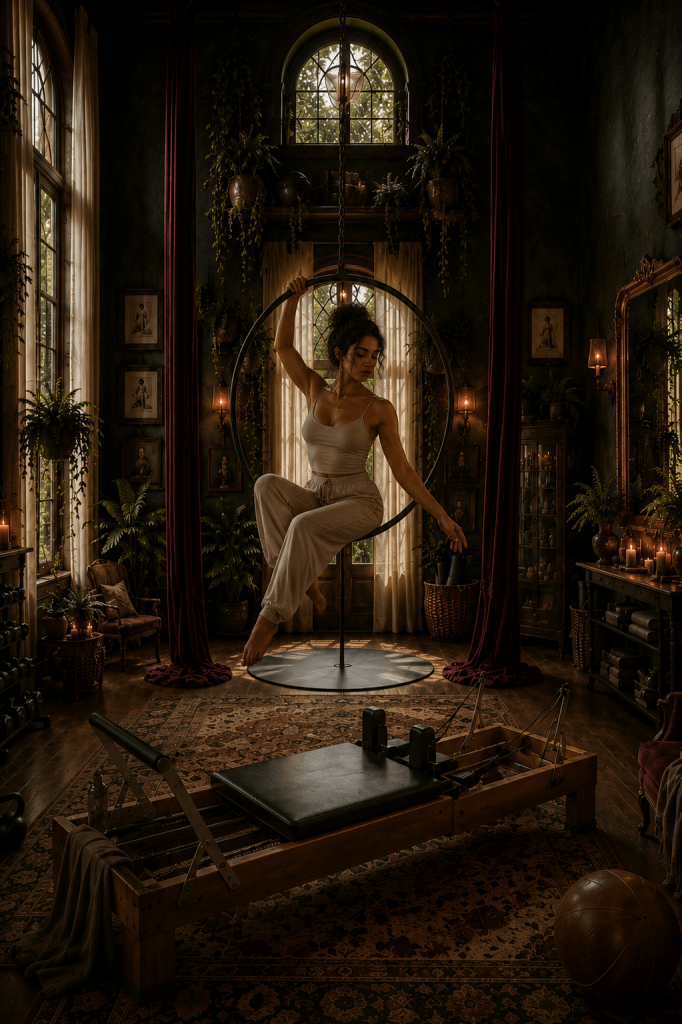
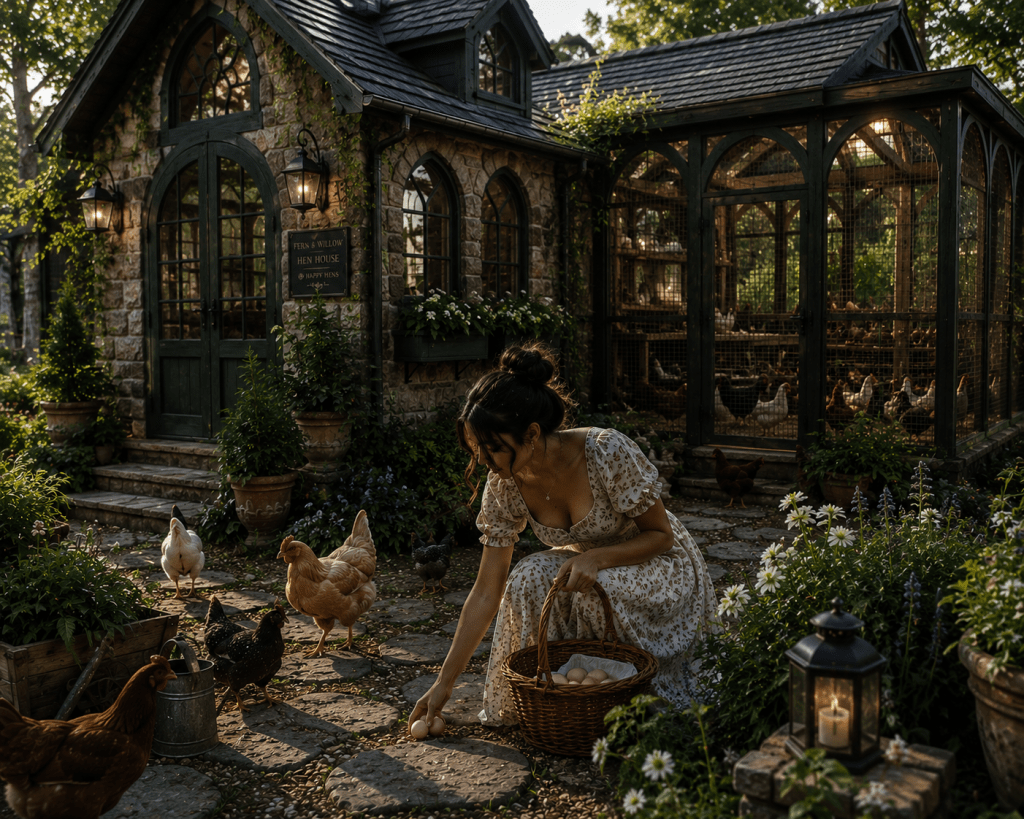
Fifty-four slides. Thirty named rooms. (This is just a snapshot of the full vision). A Gothic Revival stone exterior, a Victorian apothecary kitchen, a devotional prayer room in a tower, a saltwater pool inside a wrought-iron conservatory, and a rose garden named Le Jardin de Magdaline. Floor-to-ceiling bookshelves, copper clawfoot tubs, unlacquered brass on every surface, and ivy growing over all of it.
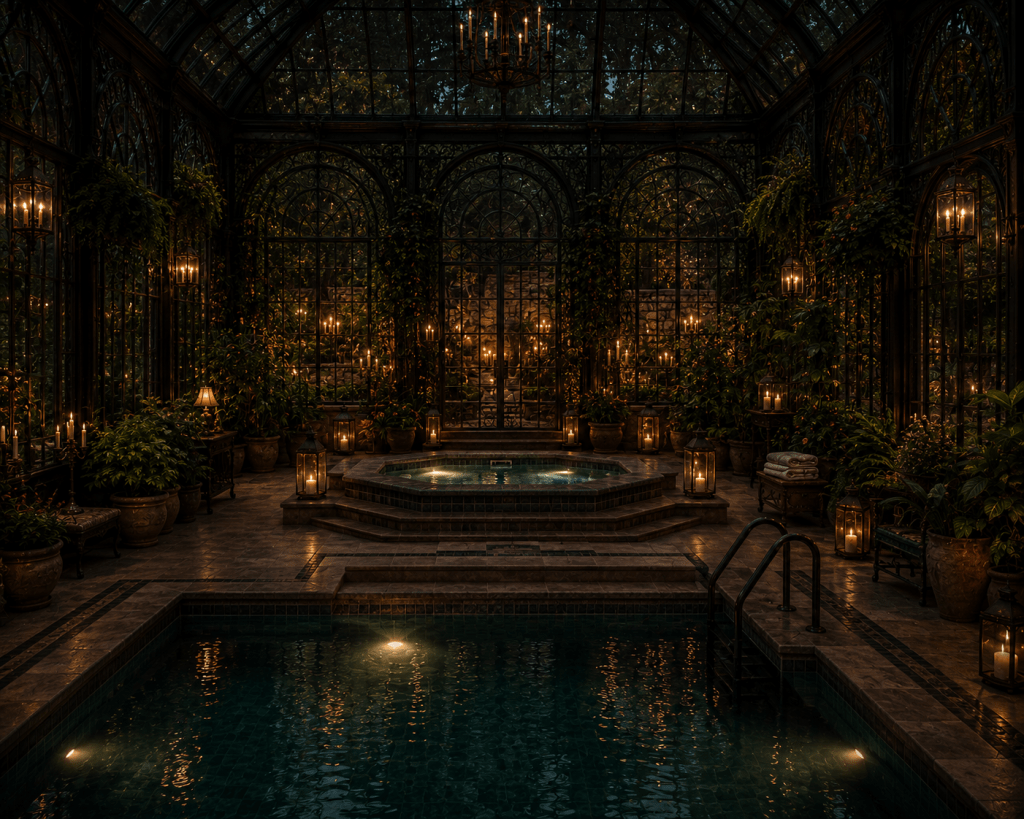
This is what happens when you give a dark academia Catholic botanist-scholar access to AI image generation and refuse to let her stop.
Welcome to the estate of my dreams.
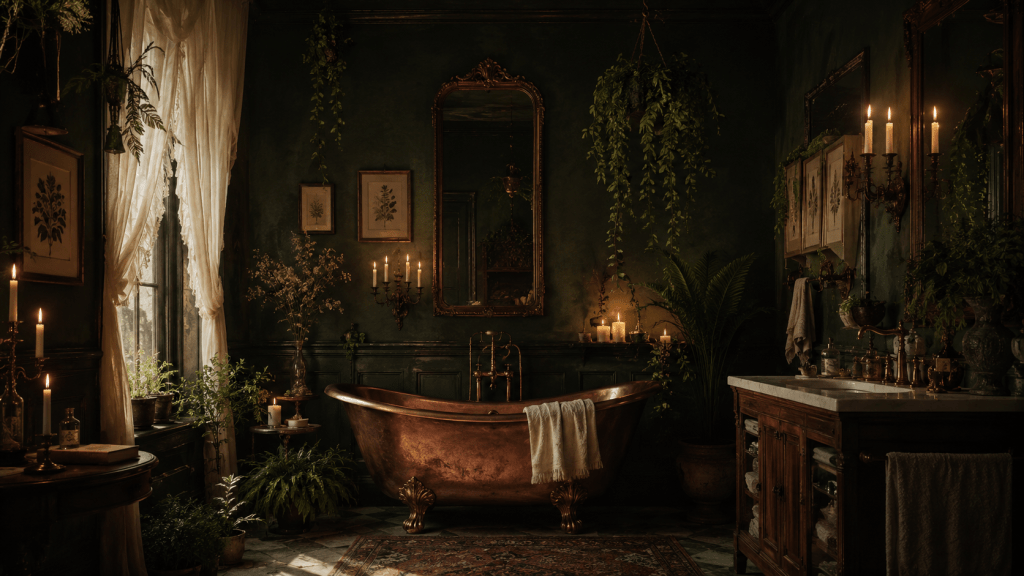
My design style sits at the intersection of five distinct traditions — and honestly, utilizing AI to create a vision board of my dream estate, and naming the styles helped me understand myself better than years of saving Pinterest boards ever did.
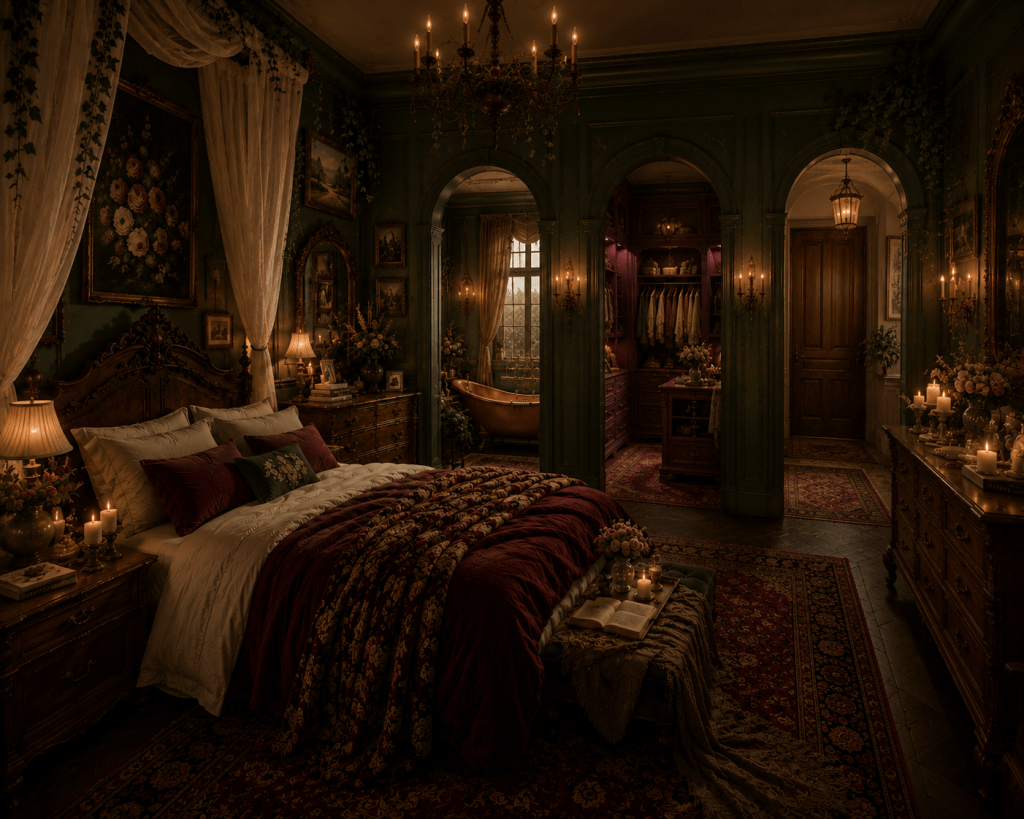
Gothic Revival Romanticism is the architecture, the starting point, the bones. Pointed arches, stone, iron, candlelight, vertical aspiration. But it’s not cold gothic. It’s not austere or performatively dark. It’s the warm, inhabited version — ivy growing over it, candles lit inside it, a copper tub sitting in the middle of it. Gothic as shelter, not spectacle.
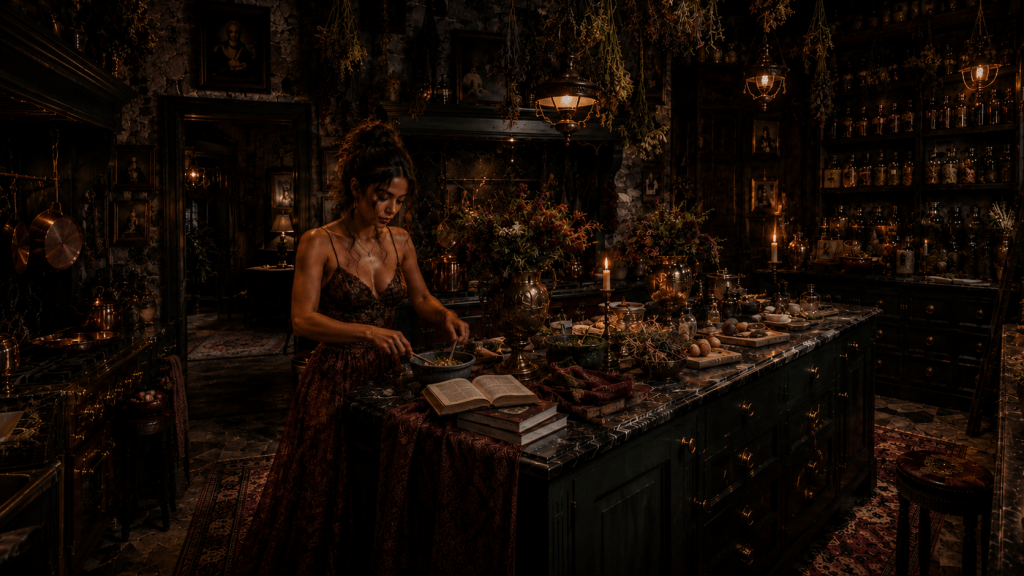
Victorian Botanica means every room I design breathes. Plants are structural, not decorative. Trailing ivy is load-bearing in the aesthetic sense. The herbalist’s kitchen, the drying herb bundles, the spikenard on the vanity — I’m drawn to the interior of a 19th century naturalist’s manor, someone who collected specimens and believed the natural world was sacred data. Because it is.
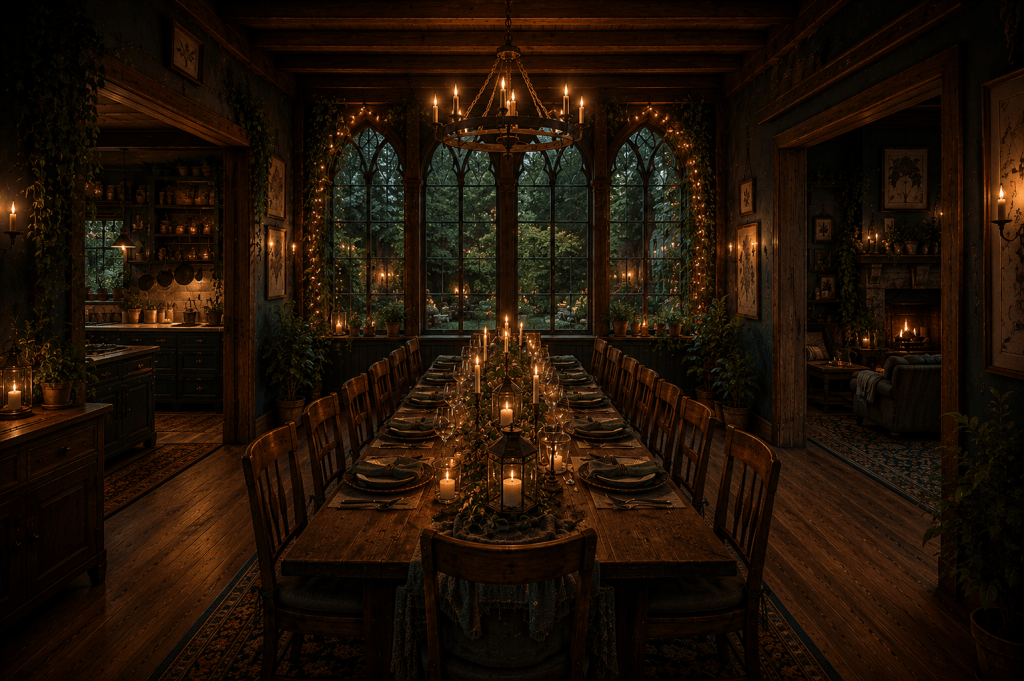
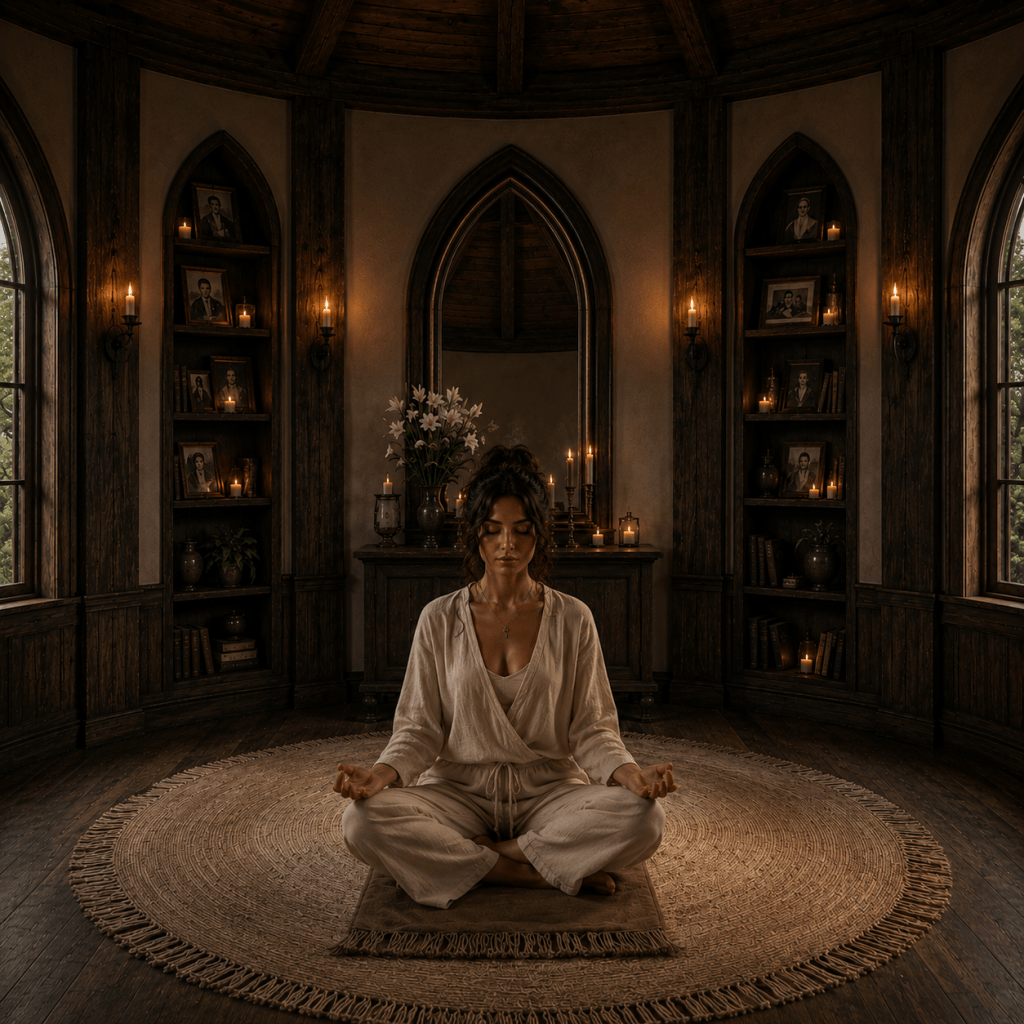
Catholic Devotional Maximalism is the thread that separates what I do from anyone else working in dark academia right now. The darkness in my rooms isn’t nihilistic or merely theatrical. It’s reverential. The dim light is candlelight because candles are offerings. The copper tub is an anointing vessel. The rose garden is a grotto. The density and layering of objects in every room reads like an altar — intentional accumulation with meaning attached to each element. Nothing is there just because it looks good.
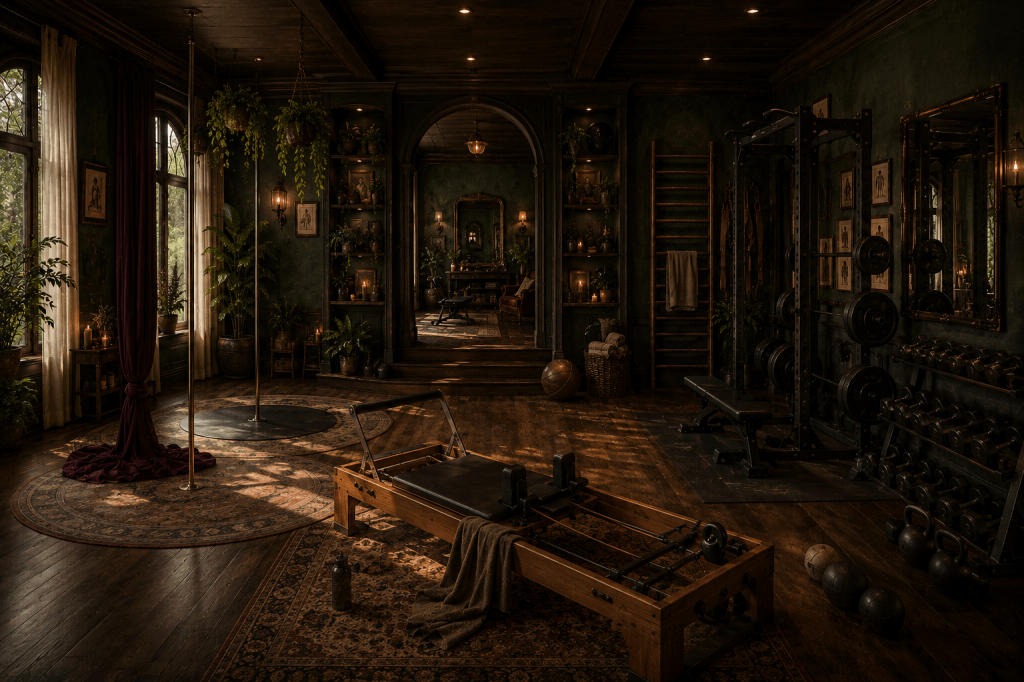
Scholar’s Pragmatism lives underneath all the romance, and it’s what keeps the whole thing honest. Every room has a job. The hallway has a naturalist’s worktable. The gym is disciplined and dark but has a door straight to the garden. The study is a war room. The kitchen is a working altar, not a showroom. I don’t design rooms that look lived-in. I design rooms for living in, and the beauty is a byproduct of the intentionality.

Romantic Maximalism with Structural Discipline — this is the paradox that makes everything work, and probably the thing I’ve taken the longest to articulate about myself. I want abundance. Books everywhere, plants everywhere, art everywhere, rugs on rugs, candles on every surface.
But the rule I keep coming back to is this: display is part of the design — chaos is not. I’m a maximalist with a curator’s eye. That combination is genuinely rare, and it’s the only thing standing between a vision and a mess.
If I had to say it in a single sentence:
Gothic Revival meets Victorian apothecary, consecrated by Catholic devotional practice, inhabited by a scholar-botanist who believes beauty is a form of prayer.
 ASH & INK
Leave a comment